

Does Your Dentist Actually Own Your Office? What Corporate Dentistry Means for You
Have you noticed something... different about your dentist's office lately?
Maybe the front desk staff turned over for the third time this year. Maybe your appointment felt rushed — like someone was watching the clock. Maybe you walked in for a cleaning and walked out with a treatment plan for $4,000 worth of work you've never been told you needed before.
You're not imagining it. And you're definitely not alone.
There's a massive, quiet shift happening in dentistry right now — and most patients have no idea it's even going on. Corporate dental chains, known as DSOs (Dental Service Organizations), are buying up private practices across the country. And there's a good chance the office you've been going to for years isn't owned by the dentist who's treating you anymore.
Let's talk about what that means for you, your family, and your wallet.
What Is a DSO (And Why Should You Care)?
A DSO — Dental Service Organization — is essentially a corporate management company that buys dental practices and runs them like a business portfolio. Think private equity meets your dental chair.
On paper, they handle the "business side" — billing, marketing, HR, supplies — while the dentist focuses on teeth. Sounds efficient, right?
Here's the problem: when a corporation owns the practice, the priorities shift. The dentist doesn't make the final call anymore. Investors do. And investors don't care about your teeth — they care about returns.
That means:
- Production quotas — dentists are expected to hit revenue targets every single day. If they don't recommend enough treatment, they hear about it.
- Upselling culture — that "you need four crowns" recommendation might have more to do with quarterly numbers than your actual oral health.
- Shorter appointments — more patients per hour = more revenue. Your 60-minute cleaning becomes 30 minutes. Your questions get rushed answers.
- Revolving door of providers — corporate offices have high turnover. The dentist you saw last time? Gone. The hygienist who knew your name? Transferred.
- One-size-fits-all treatment plans — corporate playbooks don't leave much room for personalized care. You're a number, not a patient.
This isn't speculation. The ADA has reported that DSO-affiliated practices now account for roughly 10-15% of all dental practices in the U.S. — and that number is climbing fast, especially in fast-growing markets like Arizona.
"But My Office Looks the Same..."
That's the thing — they're designed to. Most DSOs keep the original practice name on the door. Same logo, same building, sometimes even the same dentist (at least for a while). You'd never know the ownership changed unless you asked.
But behind the scenes? Completely different operation.
Here are some signs your dental office might have gone corporate:
- Your longtime dentist "retired" or "moved on" suddenly — and was replaced by someone you've never met
- You're being recommended more treatment than ever before — crowns, deep cleanings, procedures you never needed until now
- The staff keeps changing — different hygienist every visit, new front desk every few months
- Appointments feel rushed — less time in the chair, less conversation, more "let's get you scheduled for your next procedure"
- Billing got more complicated — surprise charges, confusing statements, aggressive collections
- The office started pushing financing and credit applications — because the treatment plans got more expensive
- You feel like just another appointment on a packed schedule — not a person they actually know
If you're nodding along to more than a couple of these, it might be time to ask a simple question: does your dentist actually own this practice?
Why It Matters Who Owns the Chair
When your dentist owns the practice, the incentives are aligned with your health. They're building a reputation in the community. They live here. They see you at the grocery store. Their name is on the door — literally.
An owner-operator dentist:
- Recommends only what you actually need — because their reputation depends on trust, not a quarterly earnings call
- Invests in long-term relationships — they want you coming back for 20 years, not just one big treatment plan
- Controls the pace of your care — no corporate quota says they need to see 40 patients a day
- Keeps a consistent team — because they hire, train, and retain people who care about the same things they do
- Sets fair, transparent pricing — because they answer to patients, not shareholders
This isn't nostalgic. This is just good dentistry. The way it's supposed to work.
DSOs Are Growing in Arizona — Fast
Arizona is one of the fastest-growing states in the country, and Queen Creek is right in the middle of that growth. New developments, new families, new demand for healthcare. And DSOs see dollar signs.
They're buying practices in the East Valley at a rapid pace. San Tan Valley, Gilbert, Mesa, Chandler — it's happening everywhere. And Queen Creek is no exception.
That means as a patient, you need to be more intentional about who you trust with your dental care. Not every office with a friendly website and a five-star Google rating is independently owned. Some of them report to a boardroom in another state.
What We're Doing Differently at Max Dental Club
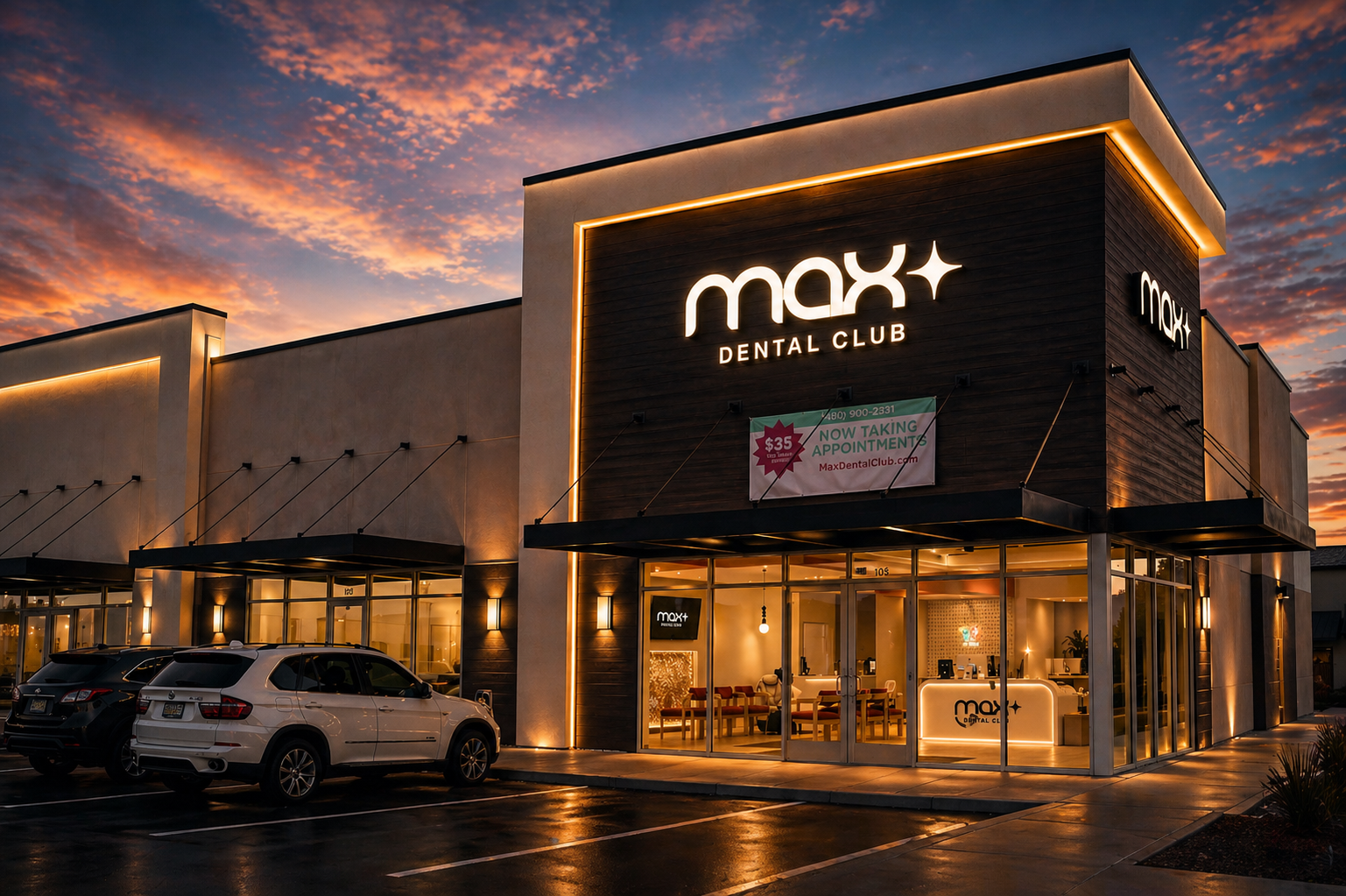
Let's be direct: Max Dental Club is 100% owned and operated by the dentists who treat you. No DSO. No investors. No corporate overlords. No quotas.
Max Dental Club was founded because our dentists saw what was happening in the industry — and wanted to build something that goes the other direction entirely. Not just an independent practice, but a membership-based model that puts the patient-dentist relationship first.
Here's what that looks like in practice:
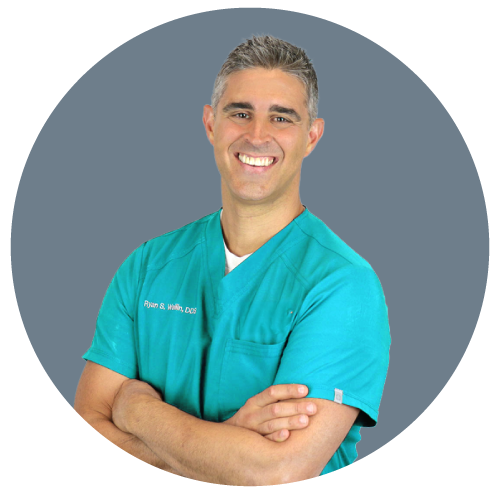
No production quotas. Our dentists, including Dr. Brian Spencer, recommend treatment based on what your mouth actually needs — not what a spreadsheet says they should sell you this month.
Long-term relationships over quick revenue. We'd rather give you a great cleaning and send you home healthy than pile on unnecessary procedures. That's how you build trust. That's how you build a practice that lasts.
Transparent, membership-based pricing. Our Join The Club membership gives you $35 cleanings, up to 50% off all services, no insurance required, and no surprise bills. You know what you're paying before you sit down. Corporate offices can't say that — because their pricing is designed to maximize extraction, not savings.
A team that stays. When your dentists own the office, they build a team they're proud of — and that team sticks around. You'll see familiar faces every time you walk in. Try that at a DSO.
Appointments that don't feel like an assembly line. We take time with every patient. We answer your questions. We explain what's going on in your mouth and why. No rushing you out the door to hit a daily target.
How to Protect Yourself as a Patient
You don't have to switch dentists tomorrow (unless you want to). But you should start asking questions:
- "Is this practice independently owned?" — If they hesitate or give a vague answer, that tells you something.
- "Has ownership changed in the last few years?" — Practices get acquired quietly. It's worth knowing.
- "Why is this treatment being recommended now?" — Especially if it's a lot of work you've never been told you needed.
- "Can I see the same dentist every time?" — Continuity of care matters. If they can't guarantee it, ask why.
- "What does this cost — before I commit?" — Transparent pricing is a sign of a practice that respects your time and money.
These aren't confrontational questions. They're smart ones. And any dentist who's proud of how they run their practice will be happy to answer them.
The Bottom Line
Corporate dentistry isn't going away. DSOs will keep buying practices, and some of them do fine work. But the model is fundamentally built around what they can get out of you — not what they can do for you.
If you want a dentist who knows your name, takes the time to explain your options, doesn't push unnecessary treatment, and actually owns the office they practice in — that still exists. You just have to look for it.
At Max Dental Club, we're building the kind of dental practice people actually want to go to. Dentist-owned. Patient-first. No corporate games.
Ready to experience the difference? Book as a new patient or Join The Club and start saving on every visit.
Got questions? Call us at (480) 900-2331. We'll give you a straight answer — because that's what independent dentistry looks like.
FAQs: Corporate Dentistry vs. Independent Dental Practices
What is a DSO in dentistry?
A DSO (Dental Service Organization) is a corporate company that acquires and manages dental practices. They handle the business operations while employing dentists to provide care. The key difference is that the dentist no longer owns the practice — a corporation does, and business decisions are often driven by investor returns rather than patient outcomes.
How do I know if my dentist's office is owned by a corporation?
It's not always obvious — most DSOs keep the original practice name. Signs include frequent staff turnover, rushed appointments, aggressive treatment recommendations, complicated billing, and difficulty seeing the same dentist consistently. The simplest way to find out? Ask directly: "Is this practice independently owned?"
Are corporate dental offices bad?
Not necessarily — some provide competent care. But the corporate model introduces production quotas, revenue targets, and incentives that can conflict with what's best for the patient. Independent, dentist-owned practices are incentivized to build long-term trust because their livelihood depends on their reputation in the community.
Is Max Dental Club independently owned?
Yes — 100%. Max Dental Club is owned and operated by the dentists who treat you. No DSO, no investors, no corporate management. Treatment recommendations are based entirely on what you need, not what a quota demands.
Why does Max Dental Club use a membership model instead of relying on insurance?
Because we believe the insurance system creates many of the same problems as corporate dentistry — middlemen making decisions about your care, confusing pricing, and limits on what's covered. Our membership model cuts out the middlemen and gives you transparent pricing, immediate coverage, and savings on every visit. No claims, no annual maximums, no waiting periods.
What dental services does Max Dental Club offer?
We offer a full range of dental services including general dentistry, cosmetic dentistry, dental implants, orthodontics and Invisalign, emergency dental care, same-day crowns, teeth whitening, and more — all at member pricing when you Join The Club.


Let’s talk teeth.
Cleanings, crowns...we’re here for it. Join the Club™